

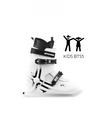
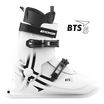


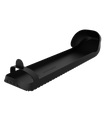




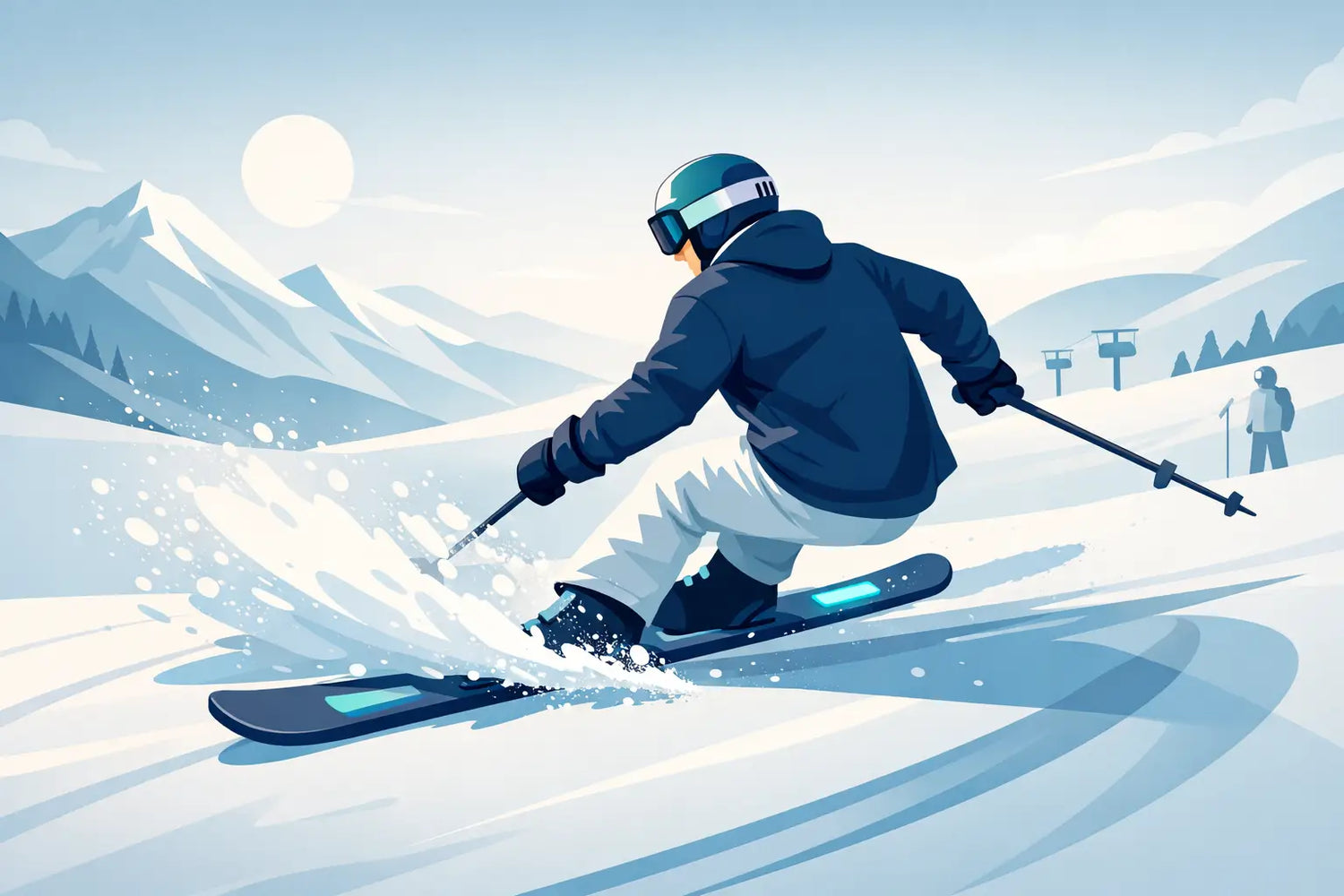
The moment most beginners panic on snow is not the first glide. It’s the first time they pick up speed and think, okay, how do I stop on Novaskis without wiping out? The good news is this is one of the biggest reasons people connect with Novaskis so fast. They feel more natural, more compact, and far less intimidating than traditional skis.
If you’ve skated, played hockey, or spent time on rollerblades, the stopping motion will feel even more familiar. If you haven’t, that’s fine too. The key is not brute force. It’s position, pressure, and timing. Once those click, stopping starts to feel controlled instead of stressful.
How to stop on Novaskis: start with body position
Before you think about edges or friction, think about stance. Most stopping problems begin too high, too stiff, or too far back. When your weight shifts onto your heels, your legs stop working for you. That’s when beginners lose confidence.
A better starting point is athletic and centered. Keep your knees bent, your chest relaxed, and your weight over the middle of your feet. Your arms should stay quiet and balanced, not flailing for control. On Novaskis, that centered stance matters because the platform is shorter and more responsive. That is a huge advantage once you stop fighting it.
Look where you want to go, not down at your feet. Looking down usually pulls your body out of alignment and makes every movement late. Your body follows your eyes more than most beginners realize.
The easiest stopping method for beginners
For most first-time riders, the easiest way to slow down is a gentle wedge-style stop. On Novaskis, this does not need to be dramatic. You are not trying to force the skis into a huge V shape. You are simply guiding the fronts slightly inward while pressing the inside edges into the snow.
Start on a very gentle slope. Glide straight for a short distance, then gradually turn your toes inward just a little. As you do that, keep your knees soft and let your legs apply even pressure. You should feel the edges begin to grip and resist the snow. That resistance is what slows you down.
The biggest mistake here is overdoing it. If you force too much angle too quickly, you can catch an edge or tense up and lose balance. Small movements work better. Novaskis are designed to be quick to learn, so you usually need less motion than you think.
Another common mistake is leaning back because speed feels scary. That actually makes stopping harder. Stay centered, trust the edge contact, and let the skis do the work.
What a good stop should feel like
A good beginner stop feels smooth, not jerky. You should notice your speed dropping in a controlled way, with both feet working together. If one foot feels dominant and the other feels like it’s being dragged along, your balance is probably uneven.
Think controlled pressure, not panic pressure. The snow should feel like it is pushing back against the edges as you slow down. If you hear a harsh scraping sound and your upper body stiffens, you are probably trying too hard.
How to stop on Novaskis using a hockey-style stop
Once you feel comfortable slowing down, you can work toward a quicker stop. For people coming from hockey, figure skating, or inline skating, this often becomes the favorite fast. It feels athletic, direct, and fun.
The hockey-style stop on Novaskis starts with a shallow traverse or gentle glide. Instead of pointing the skis inward, you rotate both feet sideways across the direction of travel while tipping the edges into the snow. Your lower body does the work. Your upper body stays stable and balanced.
This move takes timing. Too little edge angle and you keep sliding. Too much too early and you can catch hard. Start by practicing the motion at very low speed. Let the skis drift sideways slightly, then increase edge pressure as you feel them engage.
For many riders, it helps to practice this on one side first, usually the more natural side. After that, build symmetry. Being able to stop both ways gives you real mountain confidence.
Why this stop feels easier on Novaskis
Because Novaskis are shorter and more compact than traditional skis, they can feel less cumbersome during the rotation into a stop. You are managing less length, which often makes the movement feel more intuitive for beginners and crossover athletes.
That does not mean every rider should jump straight to a hockey stop on run one. If you are brand new to snow, start with the wedge-style slowdown first. Build your edge awareness. Then move into quicker stops once your stance stays stable under pressure.
Control speed before you need a full stop
The smartest riders do not wait until they are going too fast. They manage speed early. That means making smaller checks, softer edge engagements, and gentle direction changes before things feel out of control.
On Novaskis, that can be as simple as slightly turning across the slope instead of pointing straight downhill for too long. Every turn across the hill bleeds speed. That makes your final stop easier, smoother, and less dramatic.
This matters because stopping is not just one skill. It’s part of overall control. If you only practice emergency stops, you miss the easier win, which is staying in charge of your speed the whole time.
Common mistakes that make stopping harder
Most stopping issues come from a few predictable habits. One is standing too upright. Another is leaning back when speed builds. A third is trying to muscle the skis instead of applying gradual pressure.
Snow conditions matter too. Packed snow, soft snow, and icy patches all respond differently. On firmer snow, you may need cleaner edge control and more patience. On softer snow, the skis may bite sooner. That is why stopping is not exactly the same every run. The fundamentals stay the same, but the feel changes with the surface.
Beginners also tend to rush the movement. They wait too long, then try to slam into a stop. A better approach is early setup, quiet upper body, steady edge pressure.
If your stops feel inconsistent, slow everything down. Technique shows up more clearly at low speed.
Best practice drills for faster progress
If you want to learn how to stop on Novaskis quickly, practice in short, controlled reps. Start on the easiest slope you can find and repeat the same sequence. Glide. Slow down. Stop. Reset. Do it again.
One great drill is the progressive stop. Begin with a straight glide, then lightly angle the skis to feel the first bit of resistance. On the next run, add more pressure and bring yourself to a full stop. This teaches control in stages instead of forcing one big move.
Another useful drill is side-to-side edge feel. Traverse gently across the slope and experiment with increasing and decreasing edge pressure. You are not trying to stop fully every time. You are learning what grip feels like before the stop even happens.
For skaters and hockey players, the best drill is often a mini hockey check. Glide slowly, rotate slightly sideways, and let the skis scrub just a little speed. Keep it small. Build from there.
When beginners usually turn the corner
For a lot of riders, stopping starts to click within the first session. That is one of the biggest reasons Novaskis feel so different from traditional snow gear. Instead of spending a full day just trying not to fall, you can get to that first real feeling of control much faster.
The turning point usually comes when you stop thinking of braking as a desperate last-second move. It becomes a normal part of riding. Slow here. Stop there. Reset. Go again. That shift changes everything.
Confidence grows fast once stopping feels predictable. And when confidence goes up, learning gets more fun.
A final tip: stay relaxed enough to learn
If you tense up every time speed builds, your body gets rigid and your stopping gets worse. Give yourself permission to start small, stay on mellow terrain, and repeat the basics until they feel automatic. Fast progress is great, but smooth progress is better.
The real win is not just learning how to stop. It’s realizing the slope no longer feels bigger than you are. That’s when the fun starts.


Dejar un comentario
Este sitio está protegido por hCaptcha y se aplican la Política de privacidad de hCaptcha y los Términos del servicio.